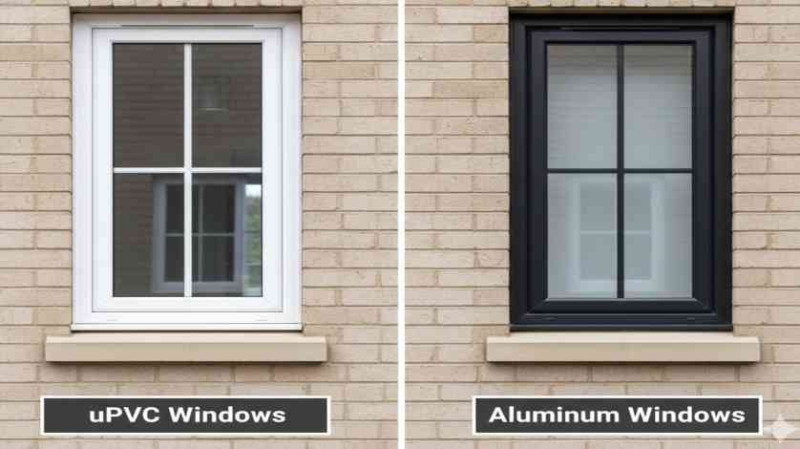
Key Differences Between uPVC and Aluminium Windows
Picking between uPVC and aluminium windows matters when you're renovating your home. Both are popular across the UK, but they perform very differently in your property. Understanding the differences helps you choose what suits your budget, property type and how much upkeep you're willing to do.
uPVC (unplasticised polyvinyl chloride) is a rigid plastic that's been the standard in UK homes for decades. Aluminium is a lightweight metal increasingly chosen for modern homes and commercial buildings. Your choice affects heating bills, appearance and how long you'll keep the windows before replacing them.
Cost Comparison: Installation and Long-Term Value
uPVC windows typically cost between £250 and £600 per window fitted, depending on size and style. A standard three-bedroom semi-detached house with ten windows might cost £3,000 to £5,500 for a complete replacement. Aluminium windows are significantly more expensive, usually ranging from £400 to £1,200 per window installed. The same property could cost £4,500 to £12,000 for a full conversion to aluminium.
Installation costs are broadly similar for both materials, though aluminium may require specialist fitting. Labour typically adds £100 to £300 per window depending on your location and whether access is difficult. Urban areas and London often see higher labour rates than rural regions.
Over 20 years, the picture changes considerably. uPVC windows generally need replacing within this timeframe, meaning another significant cost. Aluminium windows last 40+ years with minimal material degradation, so you won't face replacement expenses for several decades. When comparing total cost of ownership, the initial premium for aluminium diminishes substantially.
Finding the Right Price
Get quotes from at least three local installers to understand current pricing in your area. Prices fluctuate based on material costs, fuel surcharges and installer demand. Always ask whether quotes include VAT, fitting, debris removal and guarantees. Many installers offer discounts for multiple windows or off-season work.
Thermal Efficiency and Energy Performance
Modern uPVC windows insulate well. Standard double-glazed uPVC achieves U-values around 1.2-1.4 W/m²K, meeting Building Regulations. Triple-glazed uPVC improves this to 0.7-0.9 W/m²K, reducing heat loss and keeping your home warm without excessive heating costs.
Aluminium conducts heat easily, which is why modern aluminium windows include thermal breaks—an insulating plastic strip between the inner and outer aluminium frames that stops heat transfer. Well-designed aluminium windows achieve similar U-values to uPVC: around 1.2-1.4 W/m²K for double-glazed, or 0.7-0.9 for triple-glazed with thermal breaks. Without thermal breaks, aluminium loses far more heat.
Neither material is inherently superior for energy efficiency. The difference comes down to frame design and quality. A cheap aluminium window without an effective thermal break performs worse than quality uPVC. A premium aluminium system with advanced thermal breaks outperforms basic uPVC. Always check the U-value rating on the window's technical data sheet rather than assuming material type determines performance.
Condensation and Moisture
Both materials can experience surface condensation in winter when internal humidity is high and external temperatures are low. This is not a fault but a result of physics. Proper ventilation, reducing moisture sources like drying washing indoors, and using trickle vents or extractor fans help prevent condensation regardless of your window material.
Durability, Maintenance and Weather Resistance
uPVC windows are virtually maintenance-free and don't require painting or staining. They resist salt air, making them suitable for coastal properties. However, uPVC can discolour over time, yellowing or becoming chalky from UV exposure. Cheap uPVC is more prone to this than premium brands. Seals and hinges may need attention after 15-20 years. Frame damage from impact is difficult to repair without replacing the entire window, and the frames eventually become brittle and may crack.
Aluminium windows need minimal maintenance beyond occasional cleaning. They don't discolour or become brittle with age. Salt air corrosion was historically a problem, but modern powder coatings and anodising provide excellent protection even in coastal areas. Aluminium frames can be damaged by impact too, but unlike uPVC, small dents and damage don't compromise the structure. Powder-coated finishes can be touched up or completely resprayed if needed. Thermal breaks in the frame don't degrade like uPVC seals.
- uPVC: maintenance-free but yellows over time, frames become brittle after 15-20 years
- Aluminium: requires no repainting, resists corrosion, remains structurally sound for 40+ years
- Both resist salt spray better than timber, though modern coatings on aluminium outperform uPVC in coastal zones
- Repairs favour aluminium; localised damage can be fixed rather than replacing entire frames
Aesthetics and Design Flexibility
uPVC windows come in white, cream, grey, brown and wood-grain finishes. The range is decent but limited. Frames are necessarily thicker than aluminium because plastic alone can't support large panes without significant depth. This thicker sightline reduces glass area and natural light compared to aluminium. uPVC works well for traditional suburban homes, conservation areas and period properties where thicker frames match the original design.
Aluminium allows much thinner frames because metal is stronger. Thinner sightlines mean larger glazed areas and more light entering your home. This aesthetic suits contemporary properties, office conversions and modern extensions. Aluminium comes in virtually any colour imaginable through powder coating, including bespoke shades. You can achieve flush sash designs, picture windows and bespoke shapes that look dramatically different from standard uPVC. Architects and builders often specify aluminium for this flexibility and the clean, minimal appearance.
For listed buildings or conservation areas, planning officers often prefer windows matching the original style. uPVC is generally acceptable in these contexts if you choose profiles that mimic traditional proportions. Aluminium systems designed to match period styles are available but cost more than contemporary aluminium frames.
Environmental Impact and Sustainability
uPVC is made from petroleum-based polymers. Manufacturing requires less energy than aluminium but produces plastic that takes centuries to decompose. Some uPVC is recyclable, though contamination and degradation limit practical recycling rates. Most old uPVC windows in the UK end up in landfill.
Aluminium requires significant energy to produce initially, but it's infinitely recyclable without quality loss. Recycled aluminium uses only 5% of the energy required for virgin production. At end-of-life, aluminium windows can be melted down and reformed indefinitely. Over a 40-year lifespan, the energy cost per year is lower for aluminium than uPVC, despite the energy-intensive manufacturing process. If environmental impact matters to you, aluminium's longevity and infinite recyclability offer genuine advantages.
Choosing Between uPVC and Aluminium for Your Home
Choose uPVC if budget is your priority and you don't mind replacing windows again in 15-25 years. It's suitable for traditional homes, semi-detached properties and suburban developments. If you dislike maintenance and want instant, hassle-free windows at lower cost, uPVC delivers this. Homeowners on tight budgets typically prefer uPVC because the lower upfront cost is immediately appealing.
Choose aluminium if you value longevity, minimal maintenance, and don't want windows replaced again in your lifetime. It's ideal for contemporary homes, listed buildings with modern extensions, coastal properties, and anyone wanting maximum light through thinner frames. The higher cost is offset by 40+ years of durability, no future replacement costs, and the ability to repair rather than replace if damage occurs. Architects, builders and environmentally-minded homeowners frequently choose aluminium for these reasons.
Getting Quotes and Making Your Decision
Compare quotes from three different installers to understand realistic pricing for your postcode and property type. Ask each installer about their warranty period, material quality, and whether they source from reputable UK or European manufacturers. Request sample windows to see colour and finish options in natural light. Check online reviews and ask installers for references from recent jobs. The cheapest quote isn't always the best value if the installer disappears after fitting or uses low-quality frames that fail early.
Consider your long-term plans. If you're staying in your home for 30+ years, aluminium's durability and minimal maintenance make financial sense. If you're likely to move within 10-15 years, uPVC remains a practical choice. Your climate zone, property age, and personal style preferences should all influence your final decision alongside cost.